History
History
Studying history at Denison
THE DEPARTMENT OF HISTORY SEEKS TO DEVELOP in its students an appreciation for the richness, diversity and complexities of human history.
In the course of their studies, students are exposed to a wide range of historical periods and geographic regions, including courses on the history of America, Latin America, Europe, Africa, the Middle East and Asia.
The requirements of the history major and minor ensure that students are exposed to a broad spectrum of human historical experience, including the history of peoples whose cultures, experiences and mentalities are substantially different from their own. The department also offers students opportunities to explore particular historical problems or questions in depth and engage in original historical research.
Thus, the department endeavors not only to help students further develop their analytical and rhetorical abilities, but to formulate historically informed arguments. Students also have the opportunity to reflect on history as a discipline and the nature and uses of historical evidence in seminars on methodology, practice and theory.
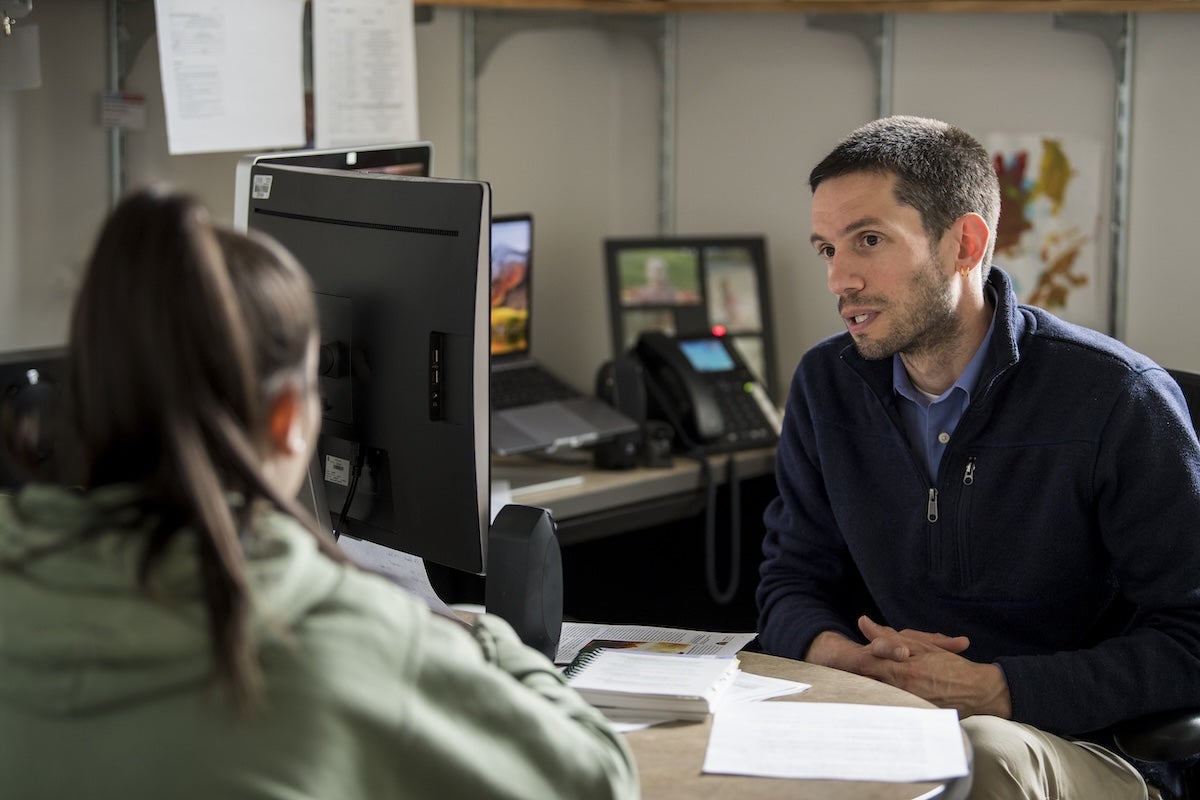
The department encourages a close working relationship between students and faculty in both introductory survey courses and advanced seminars. We also hold monthly lunches as a way of bringing students and faculty together in an informal setting. The Phi Alpha Theta history honorary society is active in organizing meetings, hosting film nights and facilitating contacts between majors.
The history major and minor
Your high school preparation for a history major at Denison should include taking history; especially advanced placement courses, working on your writing skills and getting solid preparation in geography, literature and government.
For a major, you must complete nine courses in the Department of History (36 semester hours) and demonstrate competency in three of the following areas of history: European, American, African, Latin American, East Asian and Middle Eastern history. You must also complete "Doing History," an entry level proseminar. As a senior, you must take either a seminar course or two semesters of Senior Research or Senior Honors.
For a minor, you must complete a minimum of six courses (24 semester hours) in history, demonstrating competence in the same three areas as the major and the proseminar "Doing History."
What do history majors do after Denison?
Many Denison history majors pursue careers in business, law and government service, but a number enter other fields such as teaching, social service, public administration, archival and historical museum work and communications. Some go directly into the business world, choosing to work for several years before entering an M.B.A. program. Others enter law school or graduate school immediately after graduating from Denison.
Who are our professors?
Department Chair and Professor Donald G. Schilling came to Denison in 1971 with an undergraduate degree from DePauw University and an M.A. and a Ph.D. from the University of Wisconsin. His primary field of interest is modern European history with a focus on the history of Germany in the twentieth century. Schilling regularly teaches the following courses: Modern Europe; Generation of Materialism, Europe: 1870-1914; The Origins and History of WW II; The Rise and Fall of Nazi Germany; and Confronting Evil: the Holocaust in History; in addition to sections of Doing History and the Senior Seminar.
Assistant Professor Lauren Araiza joined the history faculty at Denison in January 2007. She received her BA from Williams College and her MA and PhD from the University of California at Berkeley. Dr. Araiza teaches courses on African-American history, the Civil Rights Movement, and post-1865 U.S. history. Her research interests include the Civil Rights Movement, the Black Panther Party, multi-racial coalitions, and oral history.
Visiting Assistant Professor Michael Behrent joined the faculty at Denison in 2005. He earned a B.A. at Brown University and a Ph.D. at New York University. He teaches courses on modern Europe, modern France, the French Revolution, the Enlightenment, and modern European intellectual history. His research deals with various aspects of nineteenth- and twentieth-century French intellectual history, with a particular emphasis on the history of political thought.
Assistant Professor Ruramisai Charumbira joined the faculty at Denison in 2006 after earning a Ph.D. from Yale University. She teaches courses on the history of Africa (pre and post-1880) with an emphasis on women and gender. Some of her courses include: History of Africa to 1880, History of Africa since 1880, the History of Southern Africa, Gender, Imperialism and Colonialism, International Development in Historical Perspective, and Women in Modern Africa. Her research interests include: ethno-archaeology, historical memory, indigenous knowledge systems, imperialism, and comparative women's history.
Assistant Professor Adam J. Davis joined the faculty at Denison in 2003. He earned his B.A. at Yale University and his M.A. and Ph.D. at Princeton University. He teaches introductory courses on the history of Late Antiquity, the high and later Middle Ages, and early modern Europe. His upper level courses include Jews and Christians in Medieval Europe, the History of the University, Renaissance Italy, and the Renaissance and Reformation of the Twelfth Century. His research focuses on church and society in medieval Europe.
Associate Professor Catherine L. Dollard specializes in modern European history with an emphasis on the history of Germany. She teaches courses on modern Europe, modern Germany, European women, 20th-century Eastern Europe, and World War I. A member of the faculty since 1996, Dollard earned her B.A. from Denison and an M.A. and Ph.D. from the University of North Carolina at Chapel Hill.
Assistant Professor Lynn K. Gorchov earned her bachelor of arts degree from Wesleyan University, and her M.A. and Ph.D. degrees from Johns Hopkins University. She joined the Denison history faculty in 2004, and teaches American Civilization Since 1865, American Women's History, History of Medicine in the U.S., Sexuality in America, and Politics of Reform.
Professor Barry C. Keenan joined the faculty at Denison in 1976. He earned a B.A. at Yale University and an M.A. and a Ph.D. from Claremont University. He teaches Traditional East Asian Civilization, Modern East Asia, The Mandate of Heaven in Classical China, Confucian Classics, and East Asia Since World War II. He has published on the history of classical Chinese academies, Confucian self-cultivation, and the social history of local elites in modern China. His current research is on a newly excavated text attributed to the grandson of Confucius.
University President and Professor Dale T. Knobel is a specialist in American ethnic and race relations. Holder of a B.A. from Yale University and a Ph.D. from Northwestern University, his most recent book, America for the Americans, The Nativist Movement in the United States, was published in 1996. He teaches honors seminars on American ethnicity and nativism.
Professor Margaret L. Meriwether specializes in the early modern and modern history of the Middle East. She teaches courses on the modern Middle East, Islamic history, Palestinian-Israeli conflict, Iraq, Woman and Family in the Middle East, and Disease in History. A member of the faculty since 1981, Meriwether earned her B.A. from Bryn Mawr College and her Ph.D. from the University of Pennsylvania.
Assistant Professor Frank "Trey" Proctor III joined the faculty at Denison in 2005. He earned a B.A. at the University of California, Davis, an M.A. at the University of Arizona and a Ph.D. at Emory University. His research and teaching interests include slavery in the Americas; race, ethnicity, and identity in Latin America; the African Diaspora; and Afro-American religiosities.
Visiting Assistant Professor Alan Shackelford joined the Denison faculty in 2007. He earned his B.A. at Southwestern University, his M.A. at the University of Wyoming and his Ph.D. at Indiana University. He teaches courses about the colonial Americas, American Indian history, the American West and environmental history. He is currently finishing a manuscript that examines the relative roles of environment and cross-cultural interaction in the ethnogenesis American Indian communities in the Central Mississippi Valley.
Professor Mitchell Snay received his Ph.D. from Brandeis University. He teaches courses in American history from the colonial era through the Civil War and Reconstruction. These classes include the American history survey from settlement through the Civil War and upper-level classes like the Age of Jefferson (1800-1828). His research and writing focus on the intellectual and political history of the United States between 1815 and 1877.
For more information about the department and curriculum, go to:
or contact:
Don Schilling, Chair
Department of History
Fellows Hall, Room 428
Denison University
Granville, Ohio 43023
Phone: (740) 587-6588
Fax: (740) 587-8285
E-mail: Don Schilling